Table of Contents
- 1.The problem with gut-feel forecasting
- 2.What AI pipeline analysis actually does
- 3.The HubSpot data foundation that makes this work
- 4.Replacing bias with behavioral signals
- 5.How this changes the weekly pipeline review
- 6.The RevOps role in building this system
- 7.Building toward predictable revenue
- 8.FAQs
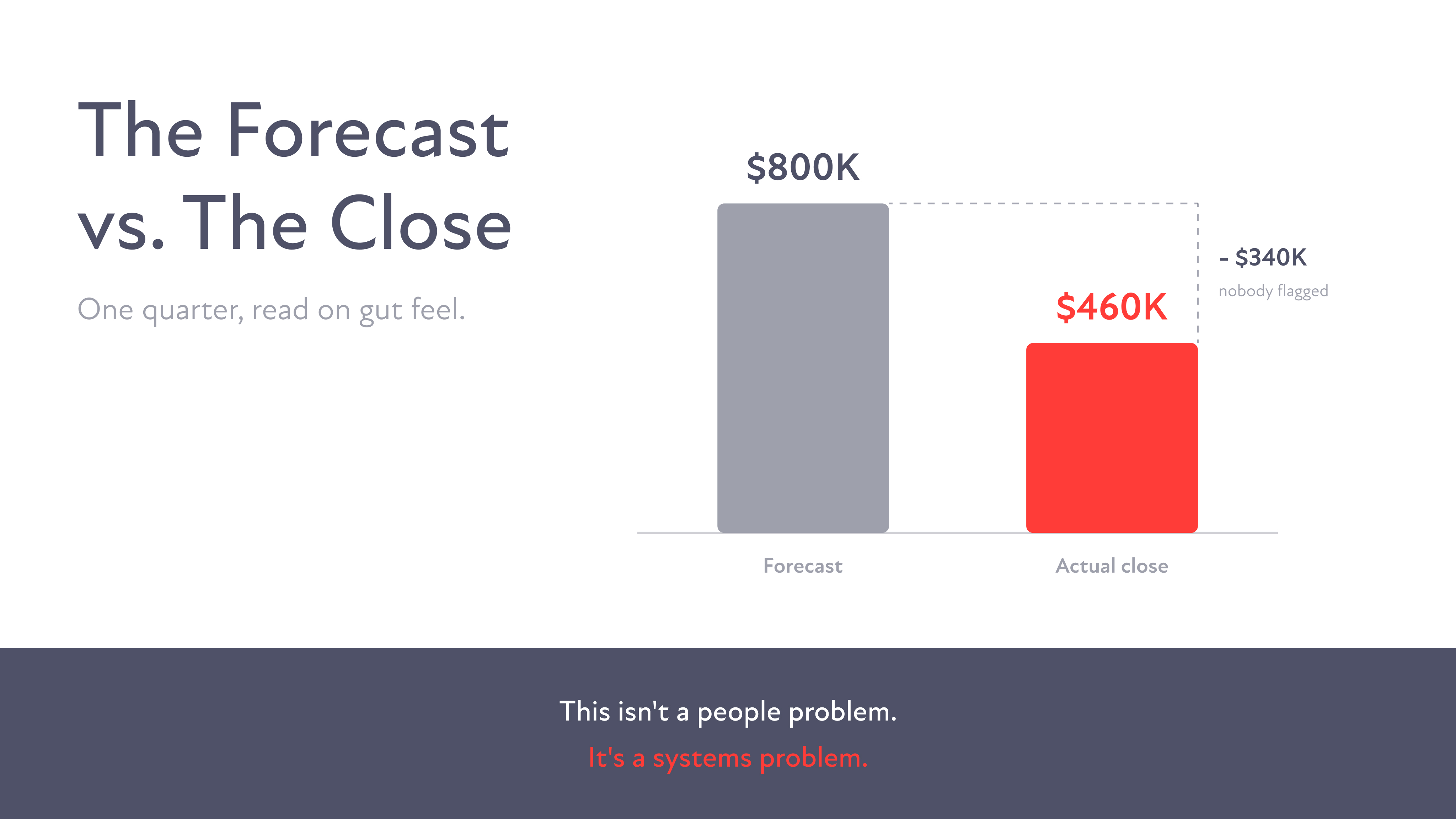
Your CRO walks into the weekly pipeline review. Sales reps give their best read on the quarter. Someone says “I’ve got a good feeling about this one.” Another deal gets pushed to next month, again. Forecast comes in at $800K. Actual close lands at $460K.
This isn’t a people problem. It’s a systems problem, and AI is finally giving revenue teams a way out.
The problem with gut-feel forecasting
Most B2B sales forecasting still runs on instinct. Reps self-report deal health. Managers layer on their own read. Leadership adjusts the number up or down based on what feels right. By the time the forecast lands, it’s been touched by five people and none of them were looking at the same data.
The result? Forecasts that swing 30-40% from actuals. Deals that were “almost closed” dying in silence. At-risk opportunities that nobody flagged until it was too late.
The problem isn’t effort. Most sales teams work hard. The problem is that human judgment without structured data is inherently inconsistent. AI changes that equation.
What AI pipeline analysis actually does
AI pipeline analysis isn’t magic. It’s pattern recognition applied to your actual CRM data. When it’s set up correctly inside HubSpot, it does a few things that manual review simply can’t.
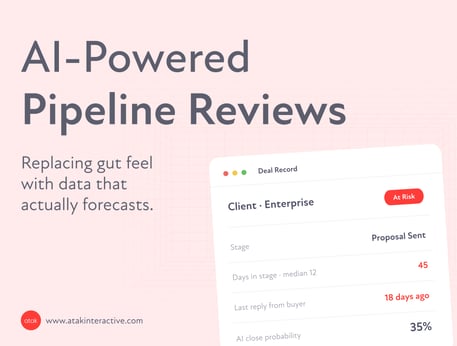
It measures deal velocity. How long has this deal been in each stage? Is it moving faster or slower than your historical averages? A deal sitting in “Proposal Sent” for 45 days when your median is 12 days is a red flag that rarely gets caught in a weekly standup.
It flags at-risk deals before they stall. AI looks at engagement signals, activity gaps, contact depth, and stage duration all at once. If no one from the prospect’s team has responded to three outreach attempts and the close date is two weeks out, the system calls it out. No waiting for the rep to raise the issue themselves.
It generates pipeline health summaries. Instead of asking each rep to manually update their forecast, AI pulls a structured read across the full pipeline. CROs get a digest showing deal momentum, projected close probability by segment, and flagged anomalies, without sitting in an hour-long call hoping someone remembered to update Salesforce.
The HubSpot data foundation that makes this work
None of this works without clean, structured CRM data. That’s the part most companies skip.
AI models are only as good as the inputs you give them. If your HubSpot instance has inconsistent stage definitions, reps logging activity in free-text notes instead of structured fields, and close dates that get pushed manually every two weeks, your AI summary is going to reflect that chaos back at you.
Before you layer on AI, you need a few things locked in: standardized deal stages with clear entry and exit criteria, contact activity tracked automatically rather than relying on rep input, deal properties that capture buying signals like multi-threading depth and decision-maker engagement, and historical close rate data by stage, segment, and rep.
When your HubSpot data is structured correctly, AI can run analysis across hundreds of deals in seconds that would take a RevOps analyst hours to produce. That’s the leverage.
Replacing bias with behavioral signals
One of the most underrated benefits of AI pipeline analysis is what it does to bias.
Human forecast reviews are full of it. Reps overweight deals they’re emotionally invested in. Managers apply pressure that skews rep self-reporting. Long-standing customer relationships get favorable treatment even when engagement signals are weak. None of this is malicious. It’s just human.
AI doesn’t have a relationship with the prospect. It doesn’t know the rep has been working this deal for eight months. It looks at the behavioral data and gives you a probability based on pattern matching. That’s not a replacement for human judgment, but it’s a useful counterweight to it.
The best RevOps teams use AI to challenge the forecast, not confirm it. When the system flags a deal at 35% likely to close and the rep says it’s a sure thing, that’s a conversation worth having before month-end.
How this changes the weekly pipeline review
When AI is generating your pipeline health summary, the weekly review changes completely.
You stop spending the first 40 minutes asking “where are we on this deal?” and start focusing on the five deals the system flagged. You stop relying on rep memory and start challenging AI-generated signals with context the system can’t see, like a relationship the rep built at a conference or a verbal commitment that hasn’t been logged yet.
The conversation shifts from status update to actual coaching. That’s where CROs add value.
For teams running HubSpot, this looks like custom pipeline dashboards pulling deal velocity metrics, automated alerts when deals go quiet past a set threshold, and weekly digest emails generated from deal stage data. Pair that with AI tools like HubSpot’s deal scoring or Gong, and you’ve got a forecasting layer grounded in behavior, not opinion.
The RevOps role in building this system
AI pipeline analysis doesn’t build itself. Someone needs to define what “at-risk” means for your business, set the thresholds, connect the data sources, and build the reporting layer.
That’s a RevOps problem. And it’s exactly the kind of work that pays off fast.
When RevOps owns the AI forecasting infrastructure, CROs stop getting surprised at the end of the quarter. Marketing and sales start working from the same pipeline visibility. Leadership makes headcount and investment decisions based on data they can actually trust.
If your forecasting is still running on spreadsheets and standup updates, this is the system upgrade worth prioritizing. The tools exist. The data is there. What most teams are missing is the architecture to connect it.
Building toward predictable revenue
AI-powered pipeline reviews aren’t about replacing your sales team. They’re about giving your sales team a better foundation to work from.
Faster identification of at-risk deals. Less time in status update meetings. More accurate forecasts that leadership can actually plan around. Coaching conversations grounded in data instead of instinct.
That’s what a well-built Revenue Engine delivers. It starts with getting your HubSpot data structured correctly and letting AI do the pattern recognition it’s built for.
If your pipeline reviews still feel like guesswork, that’s the problem worth solving next.
FAQs