Table of Contents
- 1.The HubSpot Advantage for Modern Search
- 2.Content Management Built for Multi-Platform Publishing
- 3.Campaign Automation That Connects Discovery to Revenue
- 4.Attribution That Actually Proves ROI
- 5.RevOps Integration: Search Data Flows to Sales
- 6.Why Other Platforms Fall Short
- 7.Setting Up Your Search Foundation in HubSpot
- 8.Why HubSpot Wins for Modern Search
- 9.FAQs
Why HubSpot is the Best Tool for Running and Measuring ATAKSearch Campaigns
The visibility problem most marketing teams can't solve.
Your buyers aren't just Googling anymore. They're asking ChatGPT. They're watching YouTube explainers. They're scrolling TikTok for product reviews. They're checking Perplexity for comparisons.
Most marketing teams have no clue if they're showing up in any of those places.
Welcome to 2026 search marketing: a fragmented mess of traditional SEO, AI-powered answer engines, video platforms, and paid channels that all need to work together. Most companies treat these as separate silos—different teams, different tools, different dashboards, zero integration.
That's exactly why visibility plateaus and ROI becomes impossible to prove.
Here's what changed: search isn't just about ranking anymore. It's about representation across every platform where buyers ask questions. You need a system that executes multi-channel campaigns, tracks all of it, measures what matters, and proves which efforts drive revenue.
That system is HubSpot—when you run it the ATAK way.
This isn't about HubSpot being "good at SEO." It's about HubSpot being the only platform that lets you execute, measure, and optimize integrated search campaigns that unify traditional SEO, answer engines, AI platforms, and paid visibility into one revenue-driving engine. For details on how this integration works, read our guide on integrating paid, organic, and AI search.
The HubSpot Advantage for Modern Search
Most marketing platforms were built for a world where search meant Google and conversions meant form fills. HubSpot evolved.
Unified data model: All your content, contacts, deals, and campaigns live in one ecosystem. No duct-taped integrations between five different tools.
Built-in attribution: Track every touchpoint from first click to closed deal. See which search efforts actually drive revenue, not just traffic.
Content plus CRM together: Publish content, track engagement, nurture leads, and close deals all in the same platform. Your blog post isn't just content—it's a deal-stage asset with measurable pipeline influence.
Automation at scale: Build workflows that respond to search behavior, nurture AI-discovered leads, and personalize follow-up based on which content someone engaged with.
Custom properties and reporting: Track metrics other platforms don't even consider—AI citation share, video discovery rates, cross-platform engagement, entity recognition.
This is why HubSpot is the foundation of modern search campaigns. It's not just where we publish content. It's where we execute strategy, measure visibility, and prove ROI.
Content Management Built for Multi-Platform Publishing
HubSpot's CMS was designed for marketers who need to move fast without breaking things.
SEO recommendations built into the editor: Real-time suggestions for title tags, meta descriptions, header structure, and keyword usage appear as you write. No guesswork about what Google wants.
Schema markup support: Add structured data (FAQ, HowTo, Organization) directly in the content editor. This is critical for getting cited in AI Overviews and chat platforms. For implementation details, read our complete guide to schema markup.
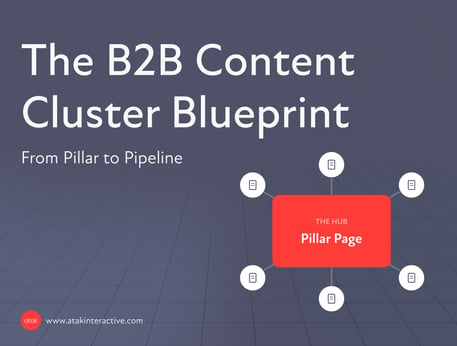
Pillar-cluster architecture: Build topic clusters that signal topical authority to Google and AI engines. HubSpot's internal linking recommendations help you structure content the way search algorithms expect.
Version control and staging: Test changes before they go live. Roll back if needed. Most CMS platforms make this painful. HubSpot makes it easy.
What this means in practice: you can publish 10+ optimized blog posts per month without needing a developer. Every post is structured for traditional search AND built to be cited by AI platforms. That velocity is how you dominate competitive search landscapes.
Campaign Automation That Connects Discovery to Revenue
Modern search campaigns aren't "set it and forget it." They require constant testing, nurturing, and optimization across multiple channels. HubSpot's workflows make this manageable.
Behavior-Triggered Nurture Sequences
Someone reads your blog about HubSpot Salesforce integration? Automatically send them a related video, case study, and consultation offer over the next two weeks. The content progression happens without manual intervention.
Lead Scoring Based on Search Intent
Assign points based on which content someone consumes. High-intent topics like "hire Salesforce HubSpot integration services" get higher scores and faster sales follow-up. Low-intent educational content gets longer nurture sequences.
Cross-Channel Coordination
If someone engages with your YouTube video, HubSpot can trigger an email sequence, update their CRM record, and notify sales—all automated. This is impossible when your video platform, email tool, and CRM don't talk to each other.
AI Discovery Nurture
Track when prospects discover you through AI platforms (ChatGPT, Perplexity) and enroll them in targeted workflows. A prospect asks ChatGPT about RevOps agencies, your brand gets cited, they click through to your site and read a blog post. HubSpot captures that behavior, enrolls them in a nurture sequence, and sends personalized follow-up based on their interests. Two weeks later, they book a call.
That's not hypothetical. That's how modern search converts when you have the right infrastructure.
Attribution That Actually Proves ROI
Visibility without measurement is just noise. HubSpot turns search activity into revenue data.
Multi-Touch Attribution Models
Most analytics platforms tell you what happened. HubSpot tells you what caused it to happen.
Track first-touch attribution (which search channel brought the prospect in initially), last-touch attribution (what converted them before they became a customer), and multi-touch attribution (every interaction along the journey, weighted by influence).
A prospect might discover you through an AI Overview citation, watch a YouTube video two weeks later, read three blog posts, and then book a call after clicking a LinkedIn ad. HubSpot tracks all of that and assigns credit appropriately. You're not guessing which channels work—you know.
Custom Dashboards for Modern Search Visibility
HubSpot's custom reporting lets you build dashboards that track metrics other platforms ignore.
Track traditional SEO metrics (organic traffic, keyword rankings, backlinks), AI visibility metrics (AI Overview appearances tracked via custom properties), video discovery metrics (YouTube views, watch time, video-to-contact conversion), engagement signals (time on site, pages per session, return visits), and pipeline influence (deals influenced by search content, average deal size by source, ROI by channel).
How we track AI citations in HubSpot: we create custom contact properties like "Discovered via AI Platform" and "AI Citation Source." When prospects mention they found us through ChatGPT or Perplexity, we log it. Over time, we can measure AI discovery trends and optimize content for platforms that drive the most pipeline.
This level of visibility is impossible in standalone SEO tools. HubSpot connects search behavior to business outcomes.
RevOps Integration: Search Data Flows to Sales
The real power of HubSpot? It's a CRM, not just a marketing platform.
Contact records tied to content: Every contact in HubSpot has a history of which blog posts they read, videos they watched, and pages they visited. Sales sees this before the first call, so they can personalize outreach based on actual interests.
Deal-stage content attribution: Know which content assets influence deals at every stage. That pillar page about HubSpot Salesforce integration? You can see exactly how many deals it touched and how much revenue it influenced.
Lifecycle stage progression: Track how search-driven leads move from visitor to MQL to SQL to customer. Identify where drop-off happens and optimize accordingly.
Closed-loop reporting: Sales marks deals as won or lost. That data feeds back into marketing reports. You see which search efforts drive the highest-value customers.
Example: You publish a blog post about RevOps strategy. It ranks on Google, gets cited in ChatGPT, and drives 50 new contacts over three months. HubSpot shows that 12 of those contacts became SQLs, 5 turned into opportunities, and 2 closed as customers worth $120K in annual contract value. Now you know that blog post generated $240K in pipeline. You double down on similar content. That's RevOps-aligned search marketing.
Why Other Platforms Fall Short
Let's be clear: HubSpot isn't perfect at everything. But it's the only platform that handles the full scope of modern search campaigns without requiring five integrations and three spreadsheets.
Semrush and Ahrefs: Great for keyword research and backlink analysis. Zero visibility into what happens after the click. No CRM integration. No automation. Just data with no business context.
Google Analytics 4: Tracks website behavior but doesn't connect to your CRM. You see sessions and conversions but not which efforts drive actual revenue or influence specific deals.
WordPress: Flexible for publishing but requires plugins for SEO, analytics, automation, and CRM. Managing five tools means gaps, data inconsistencies, and slow execution. Nothing talks to each other natively.
Salesforce plus Pardot: Powerful for enterprise sales but clunky for content marketing. Publishing velocity is slow. Attribution is complicated. Not built for agile search campaigns that require daily content production.
HubSpot's edge: everything lives in one ecosystem. You publish content, track engagement, nurture leads, close deals, and measure ROI—all without leaving the platform. That integration is what makes modern search campaigns scalable.
Setting Up Your Search Foundation in HubSpot
If you want to run modern search campaigns in HubSpot, here's how to set up your foundation.
Build content infrastructure: Create pillar pages for your core topics, develop cluster content around each pillar (blog posts, videos, FAQs, case studies), and optimize everything with schema markup.
Set up custom properties: Track AI Platform Discovery (ChatGPT, Perplexity, Gemini), Video Engagement (YouTube, embedded videos), Search Intent Level (informational vs. transactional), and Content Attribution (which assets influenced the deal).
Build automation workflows: Create nurture sequences for blog readers, video watchers, and AI-discovered prospects. Implement lead scoring based on high-intent content consumption. Set up sales alerts when prospects engage with bottom-funnel content.
Create attribution dashboards: Build reports showing organic traffic by persona and topic, AI citation trends over time, content influence on pipeline, and ROI by channel (organic, paid, video, AI).
Integrate paid and organic: Use HubSpot's ad management to run Google and LinkedIn ads, retarget content engagers, test messaging in paid campaigns and apply winners to organic content, and track paid audience behavior to feed into organic strategy.
This is how you build a search engine, not just run campaigns. For a complete framework on tracking all these metrics, read our guide on building a Visibility Index in HubSpot.
Why HubSpot Wins for Modern Search
The short version: HubSpot is the only platform that lets you execute, measure, and optimize integrated search campaigns across traditional SEO, AI platforms, video, and paid channels—all in one unified ecosystem.
Other tools give you rankings. HubSpot gives you revenue attribution.
Unified ecosystem: Content, CRM, automation, and reporting in one place means no data gaps or integration issues.
Built-in attribution: Track search efforts from first click to closed deal, seeing exactly which content influences revenue.
AI-ready tools: Schema support, structured content workflows, and custom properties for tracking AI citations make modern search optimization possible.
RevOps integration: Connect search visibility directly to pipeline and revenue so leadership understands marketing's impact.
Scalable execution: Publish fast, automate nurture, and measure what matters without requiring a team of developers.
If you're running modern search campaigns, you need HubSpot. Everything else is duct tape and spreadsheets.
FAQs
Can I run ATAKSearch without HubSpot?
Technically, yes. But you'll need separate tools for CMS, CRM, automation, analytics, and attribution—then manually connect them all. HubSpot eliminates that complexity by housing everything in one platform.
What if I'm already using Salesforce?
No problem. HubSpot integrates seamlessly with Salesforce. We help clients sync both platforms so marketing runs in HubSpot while sales operates in Salesforce. Best of both worlds.
Is HubSpot's SEO functionality as good as Semrush or Ahrefs?
For pure keyword research and backlink analysis, no. But HubSpot's SEO tools are sufficient for most B2B companies, and the integration with CRM and attribution more than makes up for it. We often use Semrush for research and HubSpot for execution and measurement.
How do you track AI citations in HubSpot?
We create custom contact properties to log when prospects discover us via ChatGPT, Perplexity, or other AI platforms. This lets us measure AI visibility trends and optimize content for platforms driving the most pipeline.
How long does it take to see results?
Traditional SEO takes 6–12 months. AI visibility can happen faster—sometimes within weeks if you publish the right content. Video discovery compounds over time. Expect meaningful traction within 3–6 months with consistent execution.